
- Crude is bid, equities are barely moved. Brent trades $89.70, higher by 1.82%, and West Texas Intermediate $84.79, higher by 1.66%, after United States forces struck two Iranian rocket launchers on Larak Island. The index proxies are lower by only 0.13% to 0.16%. That gap is the story of the morning.
- The rates market moved further on Friday than the tape did. Fed funds futures now carry a 57% probability of a 25 basis point increase in September, up from roughly 35% the day before, following Chair Kevin Warsh's Jackson Hole keynote.
- Small capitalisation stocks took the repricing. The Russell 2000 fell 1.41% on Friday against the S&P 500's 0.25% — a factor of nearly six, and the cleanest read on what a hike does to the domestic, floating-rate borrower.
- Iran's retaliation crossed the Gulf. Ballistic missiles at two bases in Jordan, all reportedly intercepted, and drone strikes on Al Minhad Air Base in the United Arab Emirates.
- Nothing on the United States calendar today. The week's weight sits at the back: Institute for Supply Management manufacturing Tuesday, and the August employment report Friday.
The Coffee Grind by Provokative AI
Crude Repriced the Strait. The Bond Market Repriced Everything Else. — Monday, August 31, 2026
Pre-Market Edition · a live escalation in the Strait of Hormuz moves oil and almost nothing else, because the market has learned to price the strait as a sanctions problem rather than a supply problem — while the genuinely new information sits in Friday's fed funds curve
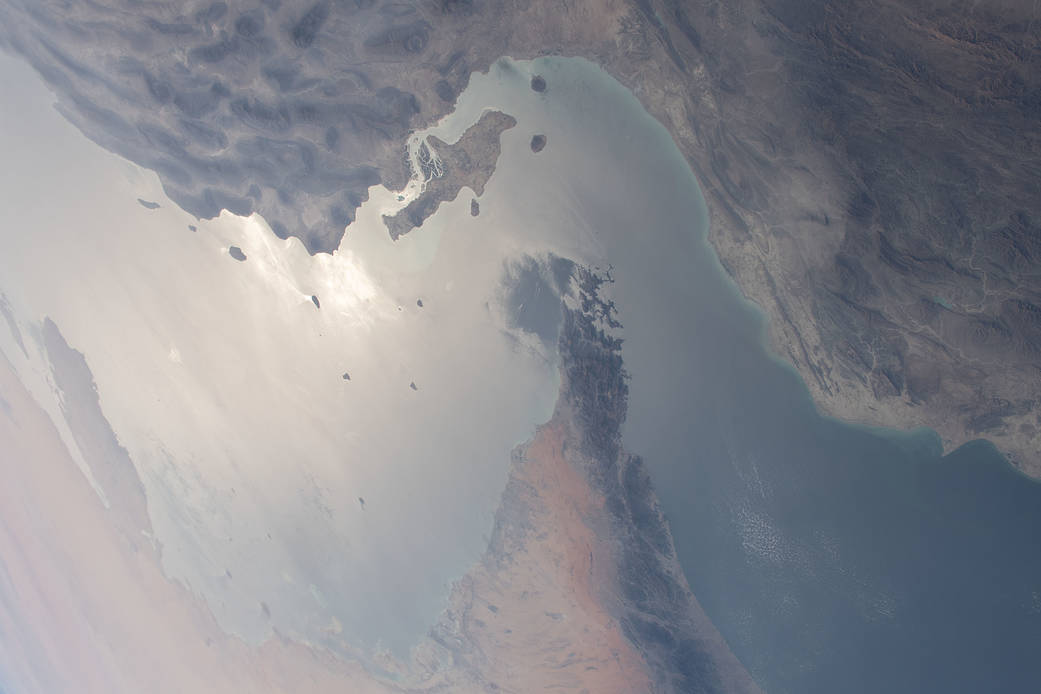
August 31 is National South Carolina Day, marking the Palmetto State's ratification of the United States Constitution in 1788 as the eighth state to join the union. It is National Trail Mix Day, and World Stop Sign Day — which takes its date from Michigan's adoption of the octagonal stop sign as an official traffic signal on August 31, 1914, the decision that made the shape a standard rather than a local convention. A market that has spent six months learning to read the same escalation headline the same way each time is doing something similar, and the value of a standardised signal is precisely that it stops having to be re-argued.
Today is also International Overdose Awareness Day. It is noted here without a market analogy, which it does not deserve.
United States data calendar: nothing of consequence today. Tuesday brings the Institute for Supply Management (“ISM”) manufacturing survey, Standard & Poor's Global manufacturing purchasing managers' index, July construction spending, and the Job Openings and Labor Turnover Survey. Wednesday brings the ADP employment report, July factory orders, and the Federal Reserve's Beige Book. Thursday brings the trade balance, jobless claims, and ISM services. Friday brings the August employment report, which is the week.
| Instrument | Friday settled close | Change on Friday | NRT mark | Change vs settled |
|---|---|---|---|---|
| Equities — settled index levels, live marks via proxy | ||||
| S&P 500 | 7,711.76 | -0.25% | — | -0.16% (SPY) |
| Dow Jones Industrial Average | 53,559.99 | -0.02% | — | -0.14% (DIA) |
| Nasdaq Composite | 26,402.42 | -0.52% | — | -0.13% (QQQ) |
| Russell 2000 | 2,972.37 | -1.41% | — | — |
| Rates | ||||
| United States Treasury 10-year | 4.72% | +4 bp | 4.72% | unchanged |
| United States Treasury 30-year | 5.21% | +2 bp | — | — |
| September hike priced, fed funds futures | 57% | from ~35% | — | — |
| Commodities | ||||
| Brent crude | ~$88.10 | — | $89.70 | +1.82% |
| West Texas Intermediate crude | ~$83.40 | — | $84.79 | +1.66% |
| Gold | ~$4,453 | — | $4,444.26 | -0.20% |
Settled columns are the Friday, August 28 New York settled close. NRT columns are live near-real-time marks, captured 05:47–05:49 ET for the equity proxies and approximately 06:05 ET for crude, gold and yields; every NRT change is measured against the prior settled close. Index futures were not cleanly available to this session, so the equity NRT column reports the exchange-traded proxies by name rather than presenting a proxy as an index future. Friday's index closes are two-source confirmed to the cent (Associated Press wire; Yahoo Finance). The Russell 2000 close is Associated Press single-source. Treasury yields are two-source (Yahoo Finance; Trading Economics). Crude and gold NRT prints are Trading Economics single-source, directionally corroborated by CNBC and by Vantage Markets' August 28 desk note; the crude and gold settled figures are derived by backing out the reported change from the live mark and are shown as approximations rather than asserted settles. This edition marks nothing.
In this edition: I. A sanctions problem, not a supply problem · II. What Friday actually did · III. Where it touches the themes · IV. What to watch
I. A sanctions problem, not a supply problem
United States forces struck two Iranian rocket launchers on Larak Island on Sunday, August 30, in the first publicly acknowledged American attack on Iranian territory in more than a month. Central Command's account is that the launchers were loaded with rockets carrying sea mines and were observed preparing to fire into the Strait of Hormuz. Iran acknowledged casualties among Revolutionary Guard forces and among civilians, and promised a response. The response arrived within hours: ballistic missiles at King Hussein Air Base and Al-Azraq Air Base in Jordan, and drone strikes on Al Minhad Air Base in the United Arab Emirates. Jordan's armed forces reported intercepting eight missiles in Jordanian airspace, and a United States official said no impacts had been confirmed as of Monday morning. Iran separately claims to have shot down an American MQ-9 Reaper over the strait.
That is a serious night. The market's answer to it is an eighth of one percent.
The reason is worth being precise about, because it is the difference between a headline and a position. Gulf oil exports have recovered to roughly 15 to 16 million barrels a day, on Goldman Sachs' estimate — still short of the 22 to 24 million that moved before the conflict began in February, but four times the 5 to 6 million of the March lows. Somewhere between 6 and 8 million barrels of crude continue to transit Hormuz daily. On August 26, Iran and Oman outlined a phased framework for a temporary shipping corridor through the strait, including joint mine-clearing. Bloomberg reports Hormuz flows creeping higher as Gulf producers ramp exports, which is precisely what has been capping each successive rebound in crude.
So the tape is no longer pricing the strait as a question of whether the oil arrives. It is pricing it as a question of whose oil arrives, at what insurance rate, under whose flag, and subject to which sanctions regime. That is a spread problem, not a level problem, and spread problems produce a bid in refining margins and freight rates without producing the equity-wide risk-off that a genuine supply interruption would. A 1.8% move in Brent alongside a 0.16% move in the index proxies is not the market being complacent. It is the market having learned the mechanism.
The honest counter-case, and it belongs in this section rather than buried at the end: this reading fails the moment the target set changes. President Trump has threatened Kharg Island, the terminal that handled roughly 90% of Iran's oil exports before the war. A strike there removes what remains of Iranian export capacity from the market outright, and the sanctions-spread framing collapses back into a supply framing very quickly. Nothing in this morning's price action is priced for that.
II. What Friday actually did
The escalation is the loud event. The consequential one happened on Friday morning in Wyoming, and it deserves to be read from the transcript rather than from the coverage of it.
Chairman Warsh's first Jackson Hole keynote did three things. It assigned responsibility plainly — “the responsibility for 65 months of sustained, elevated inflation sits squarely with the central bank” — which is a considerably sharper sentence than a central banker is obliged to say about his own institution. It declined to give forward guidance, framing that refusal as a discipline: “I stand here today committed to a discipline, not to a decision.” And it set a conditional standard with an explicit consequence attached, quoted as this edition's epigraph, ending in the four words that did the work: we have work to do. Personal consumption expenditures inflation stands at 3.7%.
The rates market did not read that as neutrality. Fed funds futures moved to a 57% probability of a 25 basis point increase at the September meeting, from approximately 35% the previous day, with the probability of a hike by year end above 70%. The 10-year Treasury yield rose four basis points to 4.72% and the 30-year two basis points to 5.21% — a bear flattening, which is what a curve does when the front end is being told something and the long end is not yet being told anything new.
The equity response was the part worth studying. The S&P 500 fell 0.25% and the Nasdaq Composite 0.52%, both of which read as ordinary Friday profit-taking in semiconductors. The Russell 2000 fell 1.41%. That is close to a six-fold difference, and it is not noise: a hike is a direct and immediate cost to the domestic small-capitalisation borrower carrying floating-rate debt, and an indirect and deferred one to a megacap technology balance sheet holding net cash. The index level understated the repricing by an order of magnitude. Anyone reading Friday from the S&P print alone concluded that Warsh moved nothing.
III. Where it touches the themes
Two registered constraint themes moved materially this pass, and the smaller one is the obvious one.
Theme 12, aviation fuel and the jet crack spread, carries the direct mechanism. A Hormuz-driven crude bid widens the refining margin that supports refiner exposure while raising the single largest variable cost line for airline exposure — the long and short sides of the same trade pulling in opposite directions on one input, which is the entire reason the theme is expressed as a spread. The tanker exposure benefits along a different channel again: freight rates and war-risk insurance premia widen on exactly this kind of night whether or not crude itself holds the gain. What has changed as of this pass is the theme's driver. Through the spring, the case rested on physical scarcity. On this morning's evidence — recovering Gulf volumes, an Iran-Oman corridor framework, flows creeping higher — it now rests on sanctions friction and logistics cost. Those produce a similar spread and a materially different volatility profile, and the theme's review log should say so rather than carrying the March rationale forward unexamined.
Theme 14, sovereign credibility and the long end, is the larger move and the more uncomfortable one, because it carries no live pair. A Federal Reserve chairman assigning his own institution responsibility for 65 months of elevated inflation, declining to guide, and setting a conditional standard that ends in “we have work to do” is the theme's thesis being argued from the podium. The long end's two-basis-point response against the front end's repricing is the thing to keep watching: sovereign credibility themes do not express themselves in the level of the 30-year so much as in its refusal to follow the front end, and Friday produced exactly that shape.
Theme 7, the smelting-capacity gap, has a real but second-order energy-cost linkage that only matters if crude holds these gains for a period rather than a session. No theme-specific development was found on this pass.
Theme 18, the artificial-intelligence capital-expenditure and electricity cluster, has no direct mechanism into either of this morning's stories. Its exposure runs through general risk tone and, more genuinely, through the rate path in Section II, since a September hike revalues long-duration growth equity. That is a real connection and it should not be dressed up as a Hormuz connection, which it is not.
IV. What to watch
- Whether crude holds the bid into the cash open. The move has already faded once: the initial Sunday futures reaction was reported near 2%, and Brent now sits higher by 1.82% with CNBC characterising it as “over 1%.” A fade toward Friday's settle by mid-morning confirms the sanctions-not-supply reading in Section I. A push through $92 Brent falsifies it.
- Kharg Island. This is the counter-case to Section I stated as a watch item. Any concrete movement toward a strike there, or any Iranian action that invites one, converts a spread story back into a supply story within a session.
- Whether the Russell 2000 keeps underperforming. Friday's six-to-one dispersion against the S&P 500 is the cleanest available read on whether the market genuinely believes the September hike or is merely quoting it. If small capitalisation stocks stabilise while the fed funds probability holds above 50%, one of the two is wrong.
- The long end's refusal to follow. Two basis points on the 30-year against four on the 10-year is the Theme 14 shape. Watch whether the 30-year continues to lag a hawkish front end this week, and particularly how it behaves into Friday's employment report.
- Friday's August employment report. There is no United States release of consequence today and ISM manufacturing does not arrive until Tuesday. The week's information is back-loaded, which argues for treating Monday's tape as positioning rather than as signal.
- What would prove the whole framing wrong. A soft payroll print on Friday collapses the September hike probability, and every argument in Section II inverts — the Russell recovers, the long end steepens for the opposite reason, and the rate channel into Theme 18 reverses sign. The bull and bear cases here share a single data point.
The Coffee Grind by Provokative AI · Brass Rat Capital LLC · Palm Beach Gardens, Florida. Prepared for Lars Toomre.
Pre-market edition. Marks are near-real-time and provisional, captured 05:47–06:05 ET, measured against the Friday, August 28 settled close; they do not mark the book of record and no settled reconciliation is implied. Friday's index and Treasury levels are two-source confirmed to the cent; the Russell 2000 close and the crude and gold prints are single-source and flagged as such in the table caption. Sources: Federal Reserve Board (Chairman Warsh's Jackson Hole keynote transcript, August 28, 2026); Associated Press and Yahoo Finance (Friday settled closes, Treasury yields, fed funds futures probabilities); Stock Analysis (pre-market proxy quotes); Trading Economics (crude, gold, 10-year yield, Goldman Sachs export estimates); Reuters via SRN News and HNGN (Iranian retaliation, base names, interception counts); The Jerusalem Post and Washington Post (Larak Island strike); CNBC (crude reaction); Vantage Markets (Iran-Oman corridor framework, Gulf export flows); Schaeffer's Investment Research (economic calendar); National Day Calendar and World Stop Sign Day (observances); NASA (hero photograph, public domain).