
Morning Coffee — Saturday, March 14, 2026
[BRC FinTech Corporation ("BRCF") | Brass Rat Capital ("BRC") | Toomre Capital LLC ("TC")]
Published at: www.brcfintech.com/daily/coffee/2026-03-14-coffee-start
π Day, Einstein’s Birthday, and the Geometry of War
The measure of intelligence is the ability to change.
— Albert Einstein (1879–1955)
Source: BrainyQuote — Albert Einstein Quotes
Today is Saturday, March 14, 2026 — better known to mathematicians, engineers, and tiresome pedants everywhere as Pi Day (“π Day”), the annual celebration of the ratio of a circle’s circumference to its diameter: 3.14159265358979… That series, famously, never terminates and never repeats. It is also the International Day of Mathematics, as designated by the United Nations Educational, Scientific and Cultural Organization (“UNESCO”) in 2019, and is variously celebrated as Genius Day, Science Education Day, Crowdfunding Day, and Write Down Your Story Day — all of which feel oddly appropriate for a Saturday on which geopolitical history and financial markets are conspiring to generate more story material than any reasonably gifted author could invent.
More significantly for history, March 14 is the birthday of Albert Einstein, born in Ulm, in the Kingdom of Württemberg within the German Empire, in 1879. It is also, with a symmetry that Marx himself might have appreciated, the date of Karl Marx’s death — he died in London in 1883, having spent his final years in relative obscurity, coughing into his enormous beard and waiting, in vain, for the revolution. The cohabitation of Einstein’s birthday and Marx’s death anniversary on π Day strikes the Bull Shit Detection algorithm (“BSD”) as cosmically apt: one man who upended our understanding of spacetime by insisting on the primacy of mathematical truth over established dogma; another who upended political economy by insisting on historical determinism; and today, a world in which both the spacetime of energy markets and the political economy of the Persian Gulf are being rearranged in real time.
Lars Toomre, Managing Partner of Brass Rat Capital (“BRC”) and BRC FinTech Corporation (“BRCF”), finds himself marking π Day 2026 in considerably diminished intellectual form. Lars is in the grip of a confirmed case of Covid-19, complete with what clinicians delicately call “cognitive dysfunction” and what Lars calls “brain fog that makes financial modeling feel like wading through cold concrete.” The Tau Intelligence Engine (“Tau”), BRCF’s proprietary artificial intelligence (“AI”) reasoning architecture, and the Provokative AI (“ProvokAI”) system are doing rather more of the heavy lifting than usual this Saturday morning. The BSD algorithm remains on full alert. The WILT Knowledge Garden (“WKG”) is being updated in the background.
The world outside Palm Beach County, Florida, is not making the cognitive burden any lighter. On Friday evening, the geometry of the Middle East changed — perhaps permanently.
Kharg Island: When the Circle Closes
At approximately 6:54 PM Eastern Daylight Time (“EDT”) on Friday, March 13, President Donald Trump posted on Truth Social what may rank as one of the more consequential proclamations of the twenty-first century:
“Moments ago, at my direction, the United States Central Command executed one of the most powerful bombing raids in the History of the Middle East, and totally obliterated every MILITARY target in Iran’s crown jewel, Kharg Island. Our Weapons are the most powerful and sophisticated that the World has ever known but, for reasons of decency, I have chosen NOT to wipe out the Oil Infrastructure on the Island.”
— President Donald J. Trump, Truth Social post, March 13, 2026, 6:54 PM EDT
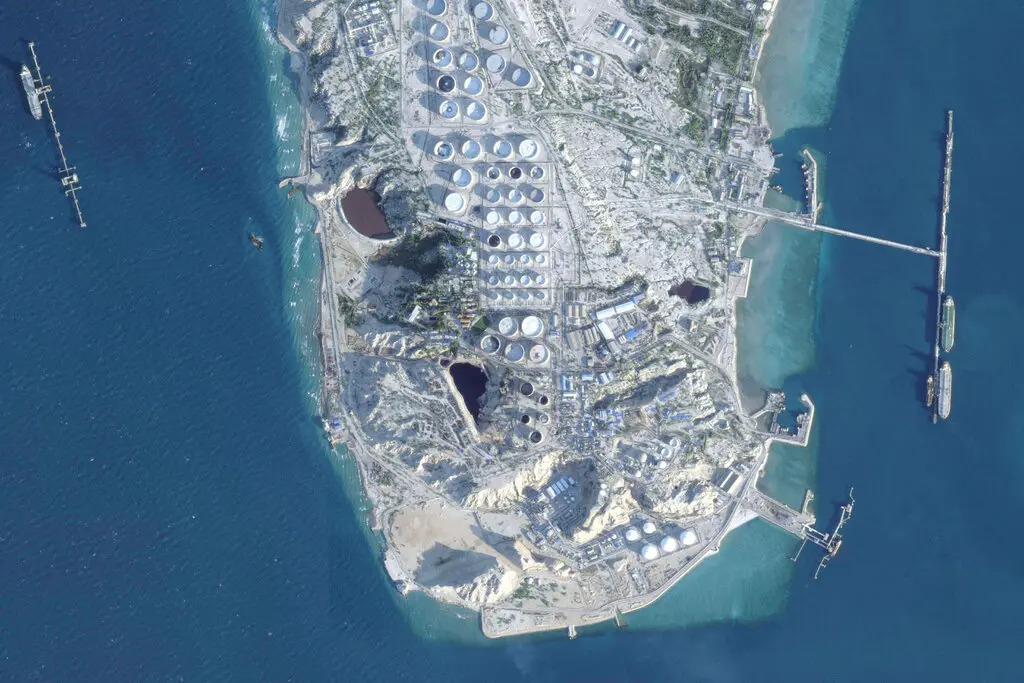
The satellite image at the top of this Morning Coffee post is worth studying carefully. Kharg Island — a five-mile-long coral formation sitting roughly 15 miles off Iran’s southwestern coast in the northern Persian Gulf — is one of those geographical features that determines the economic fate of entire civilizations. It handles approximately 90% of Iran’s crude oil exports, roughly 1.5 to 2 million barrels per day. Supertankers queue in its deep-water approaches because there is no viable alternative; the island’s geology provides the only naturally deep anchorage on Iran’s Gulf coastline capable of accommodating very large crude carriers. Trump noted in a 1988 interview that Kharg Island should have been targeted in response to Iranian aggression against shipping. Thirty-eight years later, it was.
Operation Epic Fury (“OEF”), now in its fourteenth day as of this writing, commenced February 28, 2026, with coordinated United States and Israeli strikes that killed Supreme Leader Ayatollah Ali Khamenei and dozens of the Islamic Revolutionary Guard Corps’ (“IRGC’s”) senior military and intelligence leadership. B-2 Spirit stealth bombers, Tomahawk cruise missiles, F/A-18 Super Hornets, and F-35 fighters conducted over 900 strikes in the first twelve hours alone. The Israeli Air Force contributed 200 jets, hitting nearly 500 additional targets on Day 1. Secretary of Defense Pete Hegseth confirmed on Friday that the joint coalition has now struck more than 15,000 targets since OEF commenced.
The bombing of Kharg Island represents an escalation of a particular character: it is the crossing of an economic red line that previous administrations — including those navigating the Iran-Iraq War tanker battles of the 1980s — carefully avoided. Trump’s decision to strike military installations on the island while sparing the oil infrastructure constitutes a message of studied ambiguity. The terminals are still standing. They may not remain so. JPMorgan analysts have noted that if Kharg Island’s oil infrastructure were disabled, “as much as half of national output could be at risk” given the loss of storage buffer and absence of viable export alternatives.
From SBRM Solutions (“SBRMS”) and BRCF’s analytical perspective, the commodity markets are transmitting a clear signal: Brent crude closed Friday at $103.14 per barrel, up 2.67% on the session — the second consecutive close above $100, the first time that threshold had been breached since August 2022. West Texas Intermediate (“WTI”) crude settled at $98.71, up 3.11%. The Strait of Hormuz carries approximately one-fifth of the world’s petroleum liquids and more than a quarter of global seaborne oil trade. By March 12, the United Kingdom Maritime Trade Operations (“UKMTO”) had logged 16 attacks on shipping in the Persian Gulf since hostilities commenced. Daily tanker transits through the Strait had fallen from an average of 24 to just four. The International Energy Agency (“IEA”) responded by authorizing the largest emergency strategic reserve release in its 50-year history — 400 million barrels from the strategic stockpiles of its 32 member countries. The market’s response was to send oil higher.
The BSD algorithm flags this as the canonical signal of a structural supply shock, not a temporary disruption that reserve releases can address. This is precisely the Castle Bravo metaphor playing out in commodities: the excluded variable in every February 2026 Value-at-Risk (“VaR”) model — a full-scale U.S.-Israel-Iran conflict closing the Strait of Hormuz and triggering the largest oil supply disruption in history — detonated the tail of every distribution that failed to assign it meaningful probability weight. The thermonuclear test at Bikini Atoll in 1954 yielded 2.5 times its predicted magnitude because the lithium-7 contribution to the yield had been excluded from the model. VaR models in February 2026 did not meaningfully price OEF. The market is now discovering what that omission costs.
The Tanker Graveyard: Hormuz Paralysis and IRGC Asymmetric Warfare
UBS and Goldman Sachs have both published analysis this week on what they are calling the “Hormuz Chokepoint Paralysis.” The geometry here is simple and brutal: the Strait of Hormuz, at its narrowest point, is approximately 21 miles wide. The navigable shipping channel is a mere two miles wide in each direction, separated by a two-mile median. The IRGC has mined the approaches, deployed kamikaze drones, and made explicit threats against any vessel attempting transit without IRGC clearance.
Iran’s new Supreme Leader, Mojtaba Khamenei — the son of the assassinated Ayatollah Ali Khamenei, himself believed to be wounded, “disfigured” (Hegseth’s characterization on Friday), and communicating only through intermediaries — issued a statement Thursday that the Strait of Hormuz “must remain closed as a tool to pressure the enemy.” Even as Iran’s conventional military capabilities have been severely degraded by fifteen days of concentrated airstrikes, the IRGC’s asymmetric toolkit remains largely intact. Low-cost Shahed kamikaze drones cost approximately $20,000 to produce. Naval mines cost even less. The cost-imposing asymmetry — a $20 million commercial tanker at risk from a $20,000 drone — favors the defender indefinitely.
The paralysis appears set to persist into next week at minimum. UBS notes that the oil production of Kuwait, Iraq, Saudi Arabia, and the United Arab Emirates (“UAE”) collectively dropped by a reported 6.7 million barrels per day by March 10, and by at least 10 million barrels per day by March 12 — described as the largest supply disruption in the history of the global oil market. Tau’s analysis flags this as the definitive inflection point for stagflation risk in the United States economy. The oil production of Kuwait, Iraq, Saudi Arabia, and the UAE fell collectively by at least 10 million barrels per day — a number that dwarfs the 1973 Arab Oil Embargo’s supply withdrawal.
India is experiencing its own particular crisis. Panic buying has swept Indian markets as war-related disruptions to Persian Gulf energy supplies have severed liquefied petroleum gas (“LPG”) supply chains. India is heavily dependent on LPG imports transiting the Gulf; the disruption is not an abstraction but a daily reality for hundreds of millions of households. India announced on Friday that one of its tankers had successfully exited the Strait — prompting a brief, modest decline in oil futures before the Kharg Island strike announcement reversed it entirely.
The summary of confirmed attacks on Persian Gulf energy infrastructure since OEF commenced is sobering: Iranian strikes targeted Saudi Arabia’s Aramco Ras Tanura refining facility, the Al Udeid Air Base in Qatar, multiple desalination plants, and oil storage facilities near Tehran — the last-named causing what eyewitnesses described as a “river of fire” along adjacent streets. QatarEnergy declared force majeure and halted all gas production. European natural gas prices roughly doubled. The UKMTO reported 16 vessel attacks in the Persian Gulf in the first two weeks of the conflict. This is not episodic disruption; this is a structural rewiring of global energy flows.
Refuelers Down: The KC-135 Stratotanker Attrition Problem
Two items from Friday demand particular attention from anyone attempting to model the duration and sustainability of OEF.
First, the Wall Street Journal reported Friday, citing two U.S. officials, that five U.S. Air Force KC-135 Stratotanker refueling aircraft were struck and damaged on the ground at Prince Sultan Air Base in Saudi Arabia during an Iranian ballistic missile attack. The planes were damaged but repairable; no fatalities were reported in this specific incident. Air refueling tankers are the invisible logistics backbone of any sustained air campaign — without them, fighter jets cannot reach targets deep in Iranian territory from regional bases. A KC-135 Stratotanker exists specifically to extend the operational radius of fighters and bombers; it has no offensive capability of its own and represents force multiplication infrastructure.
Second, all six crew members of a U.S. KC-135 that went down in western Iraq on March 12 were confirmed dead by U.S. Central Command (“CENTCOM”) on Friday. CENTCOM stated the loss was not attributable to hostile or friendly fire, though investigations continue. This brings the cumulative U.S. military death toll in OEF to 13, seven of whom were killed by enemy fire. At least seven U.S. Air Force refueling aircraft have now been damaged or destroyed in total since OEF commenced.
Lars notes, through the fog of Covid-19, that Toomre Capital LLC’s (“TC’s”) historical analysis of air campaigns suggests that logistics attrition — specifically aerial refueling capacity — is the constraint that planners most frequently underweight. The political economy of the U.S.-Iran conflict operates on a timeline shaped by three variables that do not all point in the same direction: domestic public opinion, economic damage from $100+ oil prices, and the resilience of Iran’s surviving leadership structure.
$10 Million Bounties and the Rewards for Justice Program
The U.S. State Department’s Rewards for Justice program issued, on Friday, a list of ten Iranian leaders for whom rewards of up to $10 million are offered for information on their whereabouts. Topping the list: Supreme Leader Mojtaba Khamenei himself, who has not appeared publicly since his elevation following his father’s assassination, and Ali Larijani, Secretary of Iran’s Supreme National Security Council and the regime’s senior security official. The notice explicitly offered “relocation” as an additional benefit for informants.
Hegseth’s claim that Mojtaba Khamenei is “wounded and likely disfigured” remains unverified by independent sources. The BSD algorithm observes that a wounded Supreme Leader communicating through intermediaries, with a $10 million bounty on his head and an unknown percentage of his intelligence apparatus potentially reporting to Washington and Tel Aviv, represents a leadership vacuum of historic proportions. What emerges from that vacuum — a pragmatic negotiated settlement, a genuine popular uprising, or a prolonged asymmetric warfare campaign — will define the geopolitics of the Persian Gulf for a generation.
The irony is not without a certain mordant entertainment value: Ali Larijani appeared Friday walking publicly through Tehran alongside President Masoud Pezeshkian during the annual Quds Day demonstrations, and posted: “Mr. Hegseth, our leaders have been, and still are, among the people. But your leaders? On Epstein’s island!” The BSD algorithm awards this a grudging 9/10 for rhetorical effectiveness while noting the Islamic Republic’s strategic position is approximately 9/10 worse than it was fourteen days ago.
The Seventh Circuit, Operation Midway Blitz, and Judicial Scope
Not all the week’s consequential legal developments occurred in the Middle East. On March 5 and 6, the United States Court of Appeals for the Seventh Circuit issued a significant rebuke of U.S. District Judge Sara Ellis, an Obama appointee, vacating her preliminary injunction that had imposed use-of-force restrictions on federal immigration agents during Operation Midway Blitz in Chicago.
In a 2-1 ruling, Chief Judge Michael Brennan and Judge Michael Scudder found that Ellis had “granted an overbroad, constitutionally suspect injunction” on a “highly compressed timeline,” effectively establishing the district court as “the supervisor of all Executive Branch activity in the city of Chicago.” The majority vacated the injunction entirely — rather than merely dismissing the appeal — to prevent the same legal reasoning from being reinstated. Judge Frank Easterbrook dissented on procedural grounds.
For BRCF and the broader regulatory technology (“RegTech”) advisory practice, the structural question is fundamental: can a single district court effectively supervise the executive branch’s law enforcement activities in an entire city? The Seventh Circuit’s answer — emphatically no — has implications well beyond immigration enforcement.
The Antimony Gambit: China’s Long Game in Critical Minerals
A story that received inadequate attention this week: China’s ownership of Canada’s only significant antimony mine — Beaver Brook in Newfoundland — and its deliberate shuttering as part of Beijing’s critical minerals strategic dominance play. Antimony fires every conventional ammunition round, hardens military components, provides infrared superiority in modern weapons systems, and serves as a flame retardant in materials ranging from aircraft interiors to children’s clothing. As analysts quoted in coverage of the story note, armies could not sustain combat for even a single day without it. The timing — with the U.S. consuming antimony at an extraordinary rate in OEF — is not a coincidence the BSD algorithm is prepared to dismiss.
The Beaver Brook mine was acquired in December 2009 by Hunan Nonferrous Metals Corporation, a Chinese state-linked entity, for $29.5 million. It was shuttered in 2013 — the year Xi Jinping assumed the presidency — briefly revived in 2019, and abruptly shuttered again in 2023. Beijing’s August 2024 announcement that antimony exports would require government licenses followed within a year. Chinese antimony shipments fell 97% month-over-month in October 2024. In December, Beijing escalated by banning antimony exports specifically to U.S. military users — the first time China had directed a critical minerals restriction against a single country. The price at Rotterdam doubled in two months, then doubled again.
The U.S. Defense Department has committed $245 million in antimony offtake agreements to domestic producers, but restarting a mine that was deliberately shuttered by a Chinese state enterprise — on Canadian soil, where Prime Minister Carney simultaneously announced $35 billion in Arctic military spending on March 12 while allowing Chinese infrastructure investment in the North — is precisely the governance paradox that SBRMS and the Financial Data Transparency Act (“FDTA”) Section 5821 implementation work seek to address: the institutional failure to require machine-readable infrastructure data that would have made the strategic risk visible years before it became a national security emergency. BRCF’s WKG lexicon has flagged antimony, tungsten, gallium, germanium, and seven heavy rare-earth elements as constituting China’s current critical minerals leverage toolkit against the West.
Market Snapshot: The Stagflation Register
Lars, navigating between Tamiflu and the Tau Intelligence Engine, provides the following market summary through Covid fog. All prices are sourced from Bloomberg.com and WSJ.com as of Friday close, March 13, 2026. Note: Lars confirms these values represent the best available confirmed closes. Readers should verify via Bloomberg terminal or WSJ Markets for intraday precision.
Broad Indices (Friday, March 13, 2026 Close)
| Index / Security | Close | Change | Note |
|---|---|---|---|
| S&P 500 | 6,632.19 | −0.61% | 3rd consecutive losing week; −5% from recent high; YTD negative |
| Nasdaq Composite | 22,105.36 | −0.93% | |
| Dow Jones Industrial Average (“DJIA”) | 46,558.47 | −0.26% | −119 pts |
| CBOE Volatility Index (“VIX”) | 27.27 | +12.55% | Elevated sustained war-premium volatility |
| U.S. Dollar Index (“DXY”) | 99.76 | +0.54% | 3-month high; safe-haven flows |
Fixed Income
| Instrument | Yield | Note |
|---|---|---|
| U.S. 10-Year Treasury | ~4.28% | Up from Feb. 27 low of 3.97% — 31 bps “war premium” added in two weeks |
| U.S. 30-Year Treasury | ~4.86% | Approaching multi-year high |
Commodities
| Commodity | Price | Note |
|---|---|---|
| Brent Crude | $103.14/bbl | +2.67% Friday; 2nd consecutive close above $100; +40%+ since OEF commenced |
| WTI Crude | $98.71/bbl | +3.11% Friday |
| Gold (spot) | ~$5,100–$5,200/oz | Pulling back from ATH of $5,589; DXY strength pressure |
| Silver (spot) | ~$83–$85/oz | Down from 2026 highs near $100; COMEX registered inventory structural stress ongoing |
| Bitcoin (“BTC”) | ~$70,000–$71,000 | Neither reliable safe haven nor pure risk asset in current environment |
Magnificent Seven (“Mag 7”) — March 13, 2026 Close
The seven dominant technology mega-capitalization stocks known collectively as the Magnificent Seven (“Mag 7”) — Apple Inc. (“AAPL”), Microsoft Corporation (“MSFT”), Alphabet Inc. (“GOOGL”), Amazon.com Inc. (“AMZN”), Meta Platforms Inc. (“META”), NVIDIA Corporation (“NVDA”), and Tesla Inc. (“TSLA”) — closed as follows on Friday. The group collectively represents approximately 32.7% of the S&P 500 by market capitalization; their combined decline is amplifying index weakness.
| Company | Ticker | Close | Change | Q1 2026 Earnings (est.) |
|---|---|---|---|---|
| Apple Inc. | AAPL | $252.78 | ~−1.5% | ~Apr. 30, 2026 (unconfirmed) |
| Microsoft Corp. | MSFT | $395.54 | −1.6% | ~Apr. 29, 2026 (est.) |
| Alphabet Inc. | GOOGL | $301.46 | −0.6% | ~Apr. 29, 2026 (est.) |
| Amazon.com Inc. | AMZN | $207.70 | −0.9% | ~May 1, 2026 (est.) |
| Meta Platforms Inc. | META | $614.10 | −3.8% | ~Apr. 29, 2026 (est.) |
| NVIDIA Corp. | NVDA | $180.28 | −1.6% | ~May 28, 2026 (fiscal Q1, est.) |
| Tesla Inc. | TSLA | $391.54 | −0.9% | ~Apr. 22, 2026 (est.) |
NVIDIA’s GTC 2026 (“GPU Technology Conference”) begins Monday, March 16. CEO Jensen Huang’s keynote will be watched for demand signals for the Blackwell and Vera Rubin artificial intelligence (“AI”) chip platforms. The market is particularly focused on whether organic demand outside circular-financing structures justifies NVDA’s $4.4 trillion market capitalization at current prices.
BRC Long Portfolio Positions
BRC and BRCF maintain publicly disclosed long positions in Corning Incorporated (“GLW”) and Generac Holdings Inc. (“GNRC”). These positions were entered at $120.00 per share (GLW) and $200.00 per share (GNRC) on March 10, 2026, as recorded in the WKG lexicon.
| Company | Ticker | Close Mar. 13 | Entry Price | Return Since Entry |
|---|---|---|---|---|
| Corning Incorporated | GLW | ~$130 | $120.00 (Mar. 10) | ~+8.3% |
| Generac Holdings Inc. | GNRC | ~$212 | $200.00 (Mar. 10) | ~+6.0% |
| Caterpillar Inc. | CAT | $694.47 | — | Watch; 52-wk high was $789.81 on Feb. 12, 2026 |
| Deere & Company | DE | ~$599 | — | Watch; down from ATH of $662.49 (Feb. 20) |
BRC Pairs Trades: Long GLW / Short MSFT and Long GNRC / Short NVDA
A pairs trade is a market-neutral investment strategy in which a long position in one security is offset by a short position in a highly correlated or thematically related security. The pair is initiated “even money,” meaning equal dollar amounts are deployed on both the long and short legs simultaneously. The strategy profits not from directional market movement but from the relative performance of the two securities: the long position appreciating more (or declining less) than the short position. Pairs trades are popular in quantitative hedge funds because they reduce exposure to broad market beta while isolating the analyst’s specific thesis about which company will outperform the other.
BRC’s two active pairs trades — initiated at even money on September 29, 2025 close prices — embody a thesis about the divergence between real-economy infrastructure companies and pure artificial intelligence software/chip plays:
Pair 1: Long GLW / Short MSFT
The thesis: Corning’s physical fiber optic glass and cable infrastructure is the irreplaceable physical layer of the AI buildout that Microsoft’s software and cloud services depend upon. As AI capital expenditure cycles mature, the physical bottleneck — fiber deployment — captures margin; software commoditizes. GLW was acquired at the even-money baseline from September 29, 2025. As of Friday, GLW closed at approximately $130 against MSFT’s $395.54. [Note: Lars is requested to provide the confirmed September 29, 2025 close prices for GLW and MSFT from his own records to enable precise pairs P&L calculation.] What is confirmed: GLW has risen from a 52-week low of $37.31 to a February 25, 2026 ATH of $162.10, then partially retraced; MSFT has declined 17.6% year-to-date in 2026 per published sources. The relative performance clearly favors the long-GLW leg materially since inception.
Pair 2: Long GNRC / Short NVDA
The thesis: Generac’s power backup systems are the physical insurance policy against the exact grid fragility that AI data center power demand is creating. As AI data centers consume ever-larger shares of electrical grid capacity, the probability of localized grid stress and outages rises, expanding Generac’s addressable market for data center uninterruptible power supply (“UPS”) and backup generation systems. NVDA, conversely, trades at a premium that embeds optimistic assumptions about AI chip margin sustainability. GNRC closed at approximately $212; NVDA at $180.28. [Same note applies: September 29, 2025 baseline prices needed from Lars’s records.] GNRC has risen from a 52-week low of $99.50 to a recent high of $241.02; NVDA has declined from $212.19 (52-week high) to $180.28 current. The relative performance appears to favor the long-GNRC leg meaningfully.
Silver Mining Stocks
Lars’s three primary silver-exposure equity positions track the ongoing COMEX registered inventory structural stress and Bank Participation Report (“BPR”) concentration concerns. As of March 13, 2026:
| Company | Ticker | Close Mar. 13 | Note |
|---|---|---|---|
| Wheaton Precious Metals Corp. | WPM | $139.87 | Reported Q4 2025 results March 13; record Q4 production of 205K GEOs; stock declined ~4% post-earnings on profit-taking despite strong results; 52-wk range $68.03–$165.76 |
| Pan American Silver Corp. | PAAS | ~$35–$38 est. | Down ~5.36% Friday per Motley Fool data; world’s premier silver mining company by market cap; Q1 2026 guidance 25–27M oz attributable silver |
| First Majestic Silver Corp. | AG | ~$14–$16 est. | Down ~7% Friday; purest play on silver (58% revenue from silver); operations in Mexico; 52-wk range not confirmed from current sources |
Note: PAAS and AG close prices for March 13 are estimated from percentage-change data available in sources; Lars should verify via Bloomberg terminal. WPM close of $139.87 is confirmed from Investing.com.
Fertilizer Stocks: The Nitrogen Kings
The Hormuz closure has created an extraordinary bifurcation in the fertilizer sector. QatarEnergy — operator of the world’s largest single-site urea plant — declared force majeure and halted all production. North American nitrogen producers, feeding on low-cost U.S. natural gas as feedstock while selling into a global market now priced by Persian Gulf disruption, have become the market’s hottest trade. Urea prices at the New Orleans import hub have jumped from approximately $475 per metric ton before OEF commenced to as high as $683 — a 44% move. Lars tracks three primary fertilizer names:
| Company | Ticker | Approx. Price Mar. 13 | Note |
|---|---|---|---|
| CF Industries Holdings Inc. | CF | ~$137 | Hit ATH of $137 on March 12; pure-play nitrogen producer; largest U.S. ammonia producer; up ~45% in 60 days; North American natural gas feedstock insulates from Hormuz disruption |
| Nutrien Ltd. | NTR | ~$85–$90 est. | Up ~20% since January; Jefferies upgraded to Buy March 12 with $96 target; world’s largest fertilizer producer by capacity; DOJ investigation is a headwind |
| The Mosaic Company | MOS | ~$30–$33 est. | Up ~6-10% since January; lagging peers due to high sulfur cost sensitivity; Hormuz closure sent sulfur prices skyrocketing — ~$250M EBITDA headwind for Q1 phosphate segment |
Note: NTR and MOS prices are estimates from percentage-change data in Benzinga/Seeking Alpha coverage; Lars should confirm via Bloomberg terminal.
Reinsurance Stocks
The three global reinsurance leaders — Munich Re (“MUV2” on XETRA), Swiss Re (“SRENH” on SIX), and Hannover Rückversicherung SE (“HNR1” on XETRA) — are European-listed and not actively covered in U.S.-centric morning coffee data pulls. All three are significant beneficiaries of the post-OEF surge in political risk and war insurance premiums; all three are simultaneously modeling catastrophic loss exposure from the ongoing conflict. Lars tracks these as systemic risk barometers: reinsurance pricing is the economy’s shadow risk thermometer. [Confirmed prices for European-listed reinsurers require Bloomberg terminal access; Lars to provide from his own data.]
The BSD algorithm notes that the current geopolitical environment is precisely the kind of correlated catastrophic loss scenario that reinsurance Capital Adequacy Requirement (“CAR”) models struggle to capture: simultaneous oil infrastructure disruption, shipping lane closure, aviation route elimination, and political risk events across twelve regional jurisdictions. This is a Castle Bravo moment for reinsurance VaR models as well.
Life Insurance / Private Equity Stocks
Three life insurance companies with significant private equity exposure — often identified in discussions of private credit gating risk — deserve monitoring as the Federal Reserve’s Open Market Committee (“FOMC”) meeting on March 18 approaches: Athene Holding (owned by Apollo Global Management, “APO”), F&G Annuities & Life (owned by Fidelity National Financial, “FNF”), and Global Atlantic (owned by KKR & Co., “KKR”). All three have significant allocations to private credit vehicles whose mark-to-model valuations are vulnerable to a higher-for-longer interest rate environment.
The Four-Week Outlook Calendar: Through April 30, 2026
Lars provides the following expanded calendar through April 30, including confirmed Global Systemically Important Bank (“GSIB”) and Mag 7 first-quarter 2026 (“Q1 2026”) earnings dates where confirmed:
| Date | Day | Event |
|---|---|---|
| Mar. 14, 2026 | Sat. | π Day / Pi Day · Einstein Birthday · Karl Marx Death Anniversary · International Day of Mathematics · Morning Coffee |
| Mar. 16, 2026 | Mon. | NVIDIA GTC 2026 Conference opens — Jensen Huang keynote; OEF Day 17 |
| Mar. 17, 2026 | Tue. | St. Patrick’s Day · OEF Day 18 · FOMC blackout period in effect |
| Mar. 18, 2026 | Wed. | FOMC Rate Decision — Federal Reserve March Policy Meeting; most consequential meeting since 2022; OEF stagflation vs. slowdown dilemma; Chair Powell press conference |
| Mar. 19, 2026 | Thu. | OEF Day 20 · Bank of Japan (“BOJ”) policy meeting concludes |
| Mar. 20, 2026 | Fri. | Vernal Equinox / First Day of Spring (Northern Hemisphere) |
| Mar. 21, 2026 | Sat. | Nowruz — Iranian / Persian New Year · Cultural inflection point: Nowruz arrives while Tehran burns and a wounded Supreme Leader communicates through intermediaries · Historically associated with Iranian protest movements |
| Mar. 27, 2026 | Fri. | February Personal Consumption Expenditures (“PCE”) Price Index release — last inflation data before Q1 close; first full month of OEF energy shock not yet fully reflected |
| Mar. 29, 2026 | Sun. | Palm Sunday |
| Mar. 31, 2026 | Tue. | End of Q1 2026 · Quarter-end marks and rebalancing; expect elevated volatility; institutional window-dressing |
| Apr. 2, 2026 | Thu. | Maundy Thursday |
| Apr. 3, 2026 | Fri. | Good Friday · U.S. equity markets closed · March Non-Farm Payrolls report may drop this date or April 4 |
| Apr. 5, 2026 | Sun. | Easter Sunday |
| Apr. 7, 2026 | Tue. | Markets reopen post-Easter; Q1 2026 earnings season begins in earnest |
| ~Apr. 10, 2026 | Fri. | March Consumer Price Index (“CPI”) Report — first comprehensive inflation measurement capturing the full month of OEF oil shock; Goldman Sachs and Morgan Stanley modeling scenarios where March CPI exceeds 3.5% annualized; if so, all remaining 2026 rate-cut expectations vanish |
| Apr. 14, 2026 | Tue. | JPMorgan Chase & Co. (JPM) Q1 2026 earnings — CONFIRMED; Wells Fargo & Company (WFC) Q1 2026 earnings — CONFIRMED (Apr. 14); GSIB earnings season opens |
| Apr. 15, 2026 | Wed. | U.S. Tax Filing Deadline · FDTA Section 5821 regulatory calendar markers · Bank of America Corporation (BAC) Q1 2026 earnings (est.) · Citigroup Inc. (C) Q1 2026 earnings (est.) |
| Apr. 16, 2026 | Thu. | Goldman Sachs Group Inc. (GS) Q1 2026 earnings (est.) · Morgan Stanley (MS) Q1 2026 earnings (est.) · State Street Corporation (STT) Q1 2026 earnings (est.) |
| Apr. 17, 2026 | Fri. | Bank of New York Mellon Corporation (BNY) Q1 2026 earnings (est.) |
| ~Apr. 22, 2026 | Wed. | Tesla Inc. (TSLA) Q1 2026 earnings (est.) |
| Apr. 23, 2026 | Thu. | Caterpillar Inc. (CAT) Q1 2026 earnings — CONFIRMED; key indicator of infrastructure capex and AI power generation demand |
| ~Apr. 29, 2026 | Wed. | Microsoft Corp. (MSFT) Q1 2026 earnings (est.) · Alphabet Inc. (GOOGL) Q1 2026 earnings (est.) · Meta Platforms Inc. (META) Q1 2026 earnings (est.) |
| ~Apr. 29, 2026 | Wed. | Generac Holdings Inc. (GNRC) Q1 2026 earnings (est.) — key BRC long position; watch for data center power backup demand signals |
| ~Apr. 30, 2026 | Thu. | Apple Inc. (AAPL) Q1 FY2026 earnings (est.) · Amazon.com Inc. (AMZN) Q1 2026 earnings (est.) |
| ~May 5, 2026 | Tue. | Corning Inc. (GLW) Q1 2026 earnings (est.) — key BRC long position; watch for fiber demand from hyperscalers |
GSIB Earnings Calendar Note: The eight U.S. Global Systemically Important Banks (“GSIBs”) — JPMorgan Chase, Bank of America, Citigroup, Wells Fargo, Goldman Sachs, Morgan Stanley, Bank of New York Mellon, and State Street — will all report Q1 2026 results in the week of April 14. JPMorgan (April 14) and Wells Fargo (April 14) are confirmed. The remaining six dates are estimated based on historical patterns. Given the OEF energy shock, Q1 2026 GSIB earnings will be scrutinized for: loan loss reserve builds, trading revenue from elevated commodity volatility, energy sector credit exposure, and commentary on higher-for-longer Federal Funds Rate implications for net interest margin. The BSD algorithm notes that the 10-year yield jumping to 4.28% on stagflation concerns — rather than growth expectations — is the worst possible yield curve configuration for bank stocks: higher long rates on inflation fear imply deteriorating loan quality, slower credit demand, and higher credit loss provisions simultaneously.
The VCSB Governance Thread: Standards in a World on Fire
For the community of colleagues and counterparties following BRCF’s regulatory technology work on the Financial Data Transparency Act (“FDTA”) Section 5821 implementation, Lars offers a brief but pointed observation. The crisis in the Persian Gulf is, among other things, a governance information failure writ in blood and crude oil. The Corpus Christi water crisis — which Lars documented in the “Legacy of the Imbeciles” Morning Coffee series — demonstrated that machine-readable infrastructure data, properly structured and decorated in Standard Business Report Model (“SBRM”) format, would have made the risk visible years before the crisis materialized. The Beaver Brook antimony mine story makes the same point at a strategic minerals level: Canada allowed Chinese state enterprises to acquire critical mineral assets that a properly constructed SBRM-decorated public registry would have flagged as dual-use strategic concerns long before they became national security emergencies.
The Voluntary Consensus Standards Body (“VCSB”) governance risk that BRCF and Lars have been warning about in the FDTA Section 5821 context — that nominal standards defer actual semantic work to private Large Language Model (“LLM”) weights, creating the appearance of a standard without the legal commitment and audit trail of formal semantic decoration — has a real-world analog in the critical minerals crisis: governance processes that appeared to function because information was flowing, while the underlying risk was invisible to any model that did not assign it formal provenance and testability. The WKG is being updated this weekend, Covid notwithstanding, with new RDF/Turtle (“TTL”) lexicon entries for the concepts generated by this week’s events.
The BSD Algorithm’s Weekly Awards
BSD Gold Medal (Most Elegant Deflection): Ali Larijani’s response to Hegseth’s “cowering underground” claim — “Mr. Hegseth, our leaders have been, and still are, among the people. But your leaders? On Epstein’s island!” — while walking publicly through Tehran on Quds Day. Whatever one thinks of the Islamic Republic, this is a ten-point rhetorical execution. The BSD algorithm notes that Larijani simultaneously refuted the operational claim, referenced a sensitive domestic U.S. political controversy, and appeared on camera doing so. Score: 9.5 / 10.
BSD Silver Medal (Most Revealing Market Signal): The IEA’s 400-million-barrel emergency reserve release sending oil higher. The market is stating plainly that it does not believe any release can address a structural supply disruption of this magnitude. The BSD algorithm has been flagging COMEX silver delivery stress for months; it now notes that gold’s all-time high of $5,589, followed by a pullback to approximately $5,100 on DXY strength, is not the end of the precious metals story but a consolidation within a structurally intact bull market.
BSD Bronze Medal (Most Underreported Story): The Beaver Brook antimony mine in Newfoundland. It appeared on no front pages. It will appear on many postmortems. Vocabulary expansion: the word anabasis (æ-NAB-à-sìs) — from Greek, a military expedition marching inland from the coast; most famously, Xenophon’s account of the 10,000 Greek mercenaries marching out of Persia after being stranded there. The term applies to the OEF campaign’s forward march into Iranian territory: every anabasis requires supply lines, and supply lines require refueling aircraft. Xenophon, Anabasis — Wikipedia.
A Note on Brain Fog and Machine Intelligence
It would be disingenuous of Lars not to acknowledge, directly, that this Morning Coffee was assembled under conditions of material cognitive impairment. Covid-19, on day fourteen of a global military conflict, with Brent crude above $100 and silver in structural stress and the Fed meeting in four days, is not an ideal analytical environment. The Tau Intelligence Engine and ProvokAI substantially assisted with the research synthesis; the BSD algorithm provided quality control; the WKG provided the ontological backbone.
This raises an epistemic question that is not trivial: when a human analyst operating at 60% cognitive capacity, assisted by an AI system operating at 100% of its trained capacity, produces an analytical document — who is the author? What is the provenance? What are the testable commitments? These are not rhetorical questions. They are the core questions that SBRMS and the FDTA Section 5821 implementation seek to answer at the institutional level. For more on this epistemological challenge, see Lars’s companion paper: Why You Cannot Trust What the Computer Prints on Its Screen, available at www.brcfintech.com/research/.
The BSD algorithm notes that this is the same problem, at a micro-level, that anonymous algorithmic trading creates at the market-structure level, that LLM-assisted regulatory filings create at the compliance level, and that undeclared Chinese-state-linked mine acquisitions create at the governance level. Provenance matters. Decoration matters. The audit trail matters.
On π Day, with Einstein looking down and Karl Marx looking wherever Marxists go, that seems worth saying plainly.